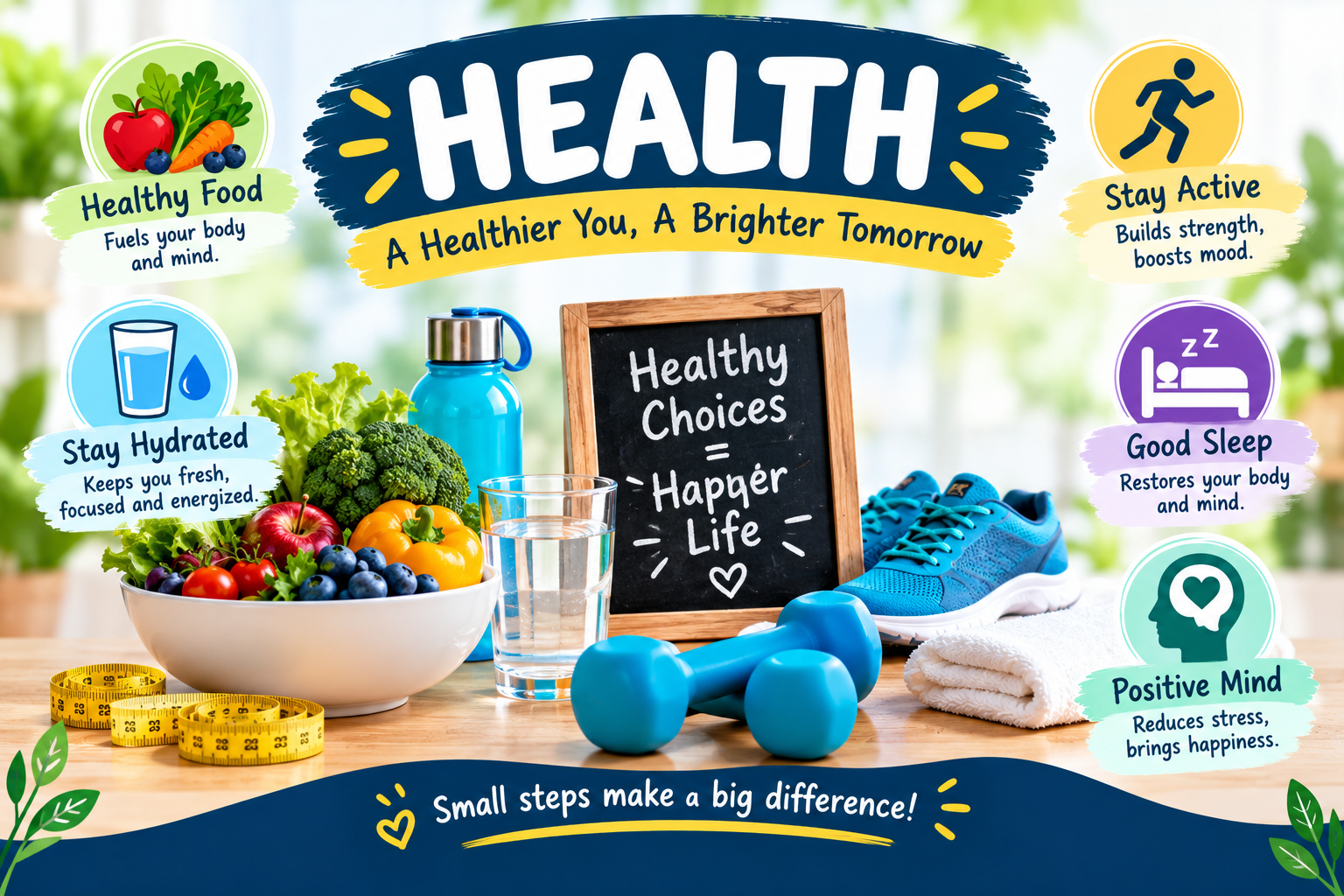
Health means the condition of a person’s body and mind, especially when they are well and free from illness. For example, someone may start eating better, exercising, and sleeping well because they want to improve their health.
We use the word health every day when talking about our bodies, lifestyles, communities, and overall well-being. However, repeating the same word can make writing less interesting. Learning synonyms for health gives English learners and content writers more ways to describe physical condition, wellness, fitness, and well-being. Each synonym has its own shade of meaning, so choosing the right one can make your message clearer. This guide explains the meaning, examples, history, pronunciation, grammar, and 30 useful synonyms for health. It also explores semantic categories and antonyms to help you use these words naturally in speaking and writing.
Meaning of HEALTH
Definition
HEALTH (Noun):
Health is the condition of a person’s body and mind, especially when they are physically and mentally well.
Examples
- Regular exercise can improve your health.
- Good health helps people enjoy their daily activities.
Connotative Meaning
Connotation means the feeling or idea that a word suggests beyond its basic meaning.
- Positive tone: Health suggests wellness, strength, energy, balance, and vitality.
- Negative tone: In some contexts, the word can bring thoughts of illness, weakness, or poor physical condition.
- Neutral tone: Health can simply refer to a person’s physical or mental condition without expressing an emotion.
Etymology
The word health has Germanic roots and has been used in English for many centuries.
- Old English (450–1100): Health developed from Old English hǣlþ, meaning wholeness, soundness, or being free from disease.
- Middle English (1100–1500): The word appeared in forms such as helthe and continued to mean soundness of body or well-being.
- Modern English (1500–Present): Its meaning expanded to include physical health, mental health, public health, financial health, and the general condition of organizations or systems.
Pronunciation (IPA)
- IPA: /helθ/
- Syllables: health (1 syllable)
Affixation Pattern of HEALTH
- Root: health
- Prefix: None
- Suffix: -th, forming a noun from the older adjective/root associated with whole or hale
Word Formations
- health — noun
- healthy — adjective
- healthily — adverb
- healthiness — noun
- healthcare — noun
- healthful — adjective
- healthfulness — noun
- unhealthy — adjective
- unhealthiness — noun
- health-related — adjective
30 Synonyms of HEALTH With Meaning & Examples
1. Well-being (Noun)
Meaning: The state of being comfortable, healthy, and happy.
Examples:
- Exercise supports both physical and mental well-being.
- Her main concern is the well-being of her family.
2. Wellness (Noun)
Meaning: The state of being healthy in body and mind.
Examples:
- The company offers a workplace wellness program.
- Good nutrition is an important part of wellness.
3. Fitness (Noun)
Meaning: The condition of being physically healthy and strong.
Examples:
- Running can improve your physical fitness.
- He works out regularly to maintain his fitness.
4. Vitality (Noun)
Meaning: Physical or mental energy and strength.
Examples:
- Fresh food can help restore your vitality.
- She approached her work with great vitality.
5. Wholeness (Noun)
Meaning: A state of being complete and healthy.
Examples:
- Meditation helped him regain a sense of wholeness.
- The program focuses on emotional wholeness.
6. Soundness (Noun)
Meaning: The condition of being healthy, strong, or in good condition.
Examples:
- The doctor checked the soundness of his heart.
- The horse’s physical soundness was carefully examined.
7. Robustness (Noun)
Meaning: The quality of being strong and healthy.
Examples:
- Regular exercise can improve physical robustness.
- The study examined the robustness of the participants.
8. Vigor (Noun)
Meaning: Physical strength, energy, and good health.
Examples:
- He returned to work with renewed vigor.
- She exercises to maintain her vigor.
9. Vigour (Noun)
Meaning: The British spelling of vigor, meaning energy, strength, and physical vitality.
Examples:
- The athlete trained with great vigour.
- She completed the task with vigour.
10. Condition (Noun)
Meaning: The physical state of a person or living thing.
Examples:
- The doctor said he was in good condition.
- Regular exercise keeps your body in good condition.
11. Fitness Level (Noun Phrase)
Meaning: A measure of someone’s physical ability and health.
Examples:
- Walking every day improved her fitness level.
- The coach tested each player’s fitness level.
12. Physique (Noun)
Meaning: The shape, size, and physical structure of a person’s body.
Examples:
- Swimming helped him develop a strong physique.
- The athlete has an impressive physique.
13. Strength (Noun)
Meaning: The physical power or ability of the body.
Examples:
- Weight training can build muscle strength.
- She regained her strength after resting.
14. Stamina (Noun)
Meaning: The ability to continue physical or mental activity without becoming too tired.
Examples:
- Cycling regularly improved his stamina.
- The athlete needs more stamina for the race.
15. Energy (Noun)
Meaning: The physical or mental power needed to do activities.
Examples:
- A good night’s sleep gives me more energy.
- Children usually have plenty of energy.
16. Livelihood (Noun)
Meaning: The means by which someone supports their life, sometimes used broadly in discussions of health and living conditions.
Examples:
- Clean water protects both health and livelihoods.
- The project supports community health and livelihoods.
17. Prosperity (Noun)
Meaning: A state of success, well-being, and good condition.
Examples:
- Good public health can support economic prosperity.
- The community worked toward greater prosperity.
18. Welfare (Noun)
Meaning: The health, happiness, and general well-being of a person or group.
Examples:
- The organization focuses on animal welfare.
- The policy aims to protect public welfare.
19. Ease (Noun)
Meaning: A state of comfort or freedom from difficulty, pain, or stress.
Examples:
- The treatment gave her some ease.
- He enjoys the ease that comes with a healthy routine.
20. Comfort (Noun)
Meaning: A state of physical or emotional well-being.
Examples:
- The patient was kept warm for comfort.
- Good support can improve physical comfort.
21. Recovery (Noun)
Meaning: The process of returning to health after illness or injury.
Examples:
- Her recovery took several weeks.
- Rest was an important part of his recovery.
22. Restoration (Noun)
Meaning: The process of returning something to a healthy or normal state.
Examples:
- Sleep supports the body’s restoration.
- The program focuses on health restoration.
23. Rejuvenation (Noun)
Meaning: The process of becoming fresh, energetic, or healthy again.
Examples:
- A short holiday gave him a feeling of rejuvenation.
- The retreat focused on rest and rejuvenation.
24. Resilience (Noun)
Meaning: The ability to recover and remain strong after difficulty.
Examples:
- Exercise can support physical resilience.
- Her resilience helped her recover from a difficult period.
25. Immunity (Noun)
Meaning: The body’s ability to resist certain infections or diseases.
Examples:
- Vaccination can help build immunity against certain diseases.
- A healthy immune system supports natural immunity.
26. Nourishment (Noun)
Meaning: Food and other support needed for healthy growth and function.
Examples:
- Children need proper nourishment as they grow.
- Fresh vegetables provide valuable nourishment.
27. Healing (Noun)
Meaning: The process of becoming healthy again after illness or injury.
Examples:
- Rest is important for healing.
- The wound showed signs of healing.
28. Longevity (Noun)
Meaning: A long life or long-lasting existence.
Examples:
- Regular exercise may support healthy longevity.
- Scientists study factors linked to longevity.
29. Good Shape (Noun Phrase)
Meaning: A condition of good physical health and fitness.
Examples:
- Walking every morning keeps him in good shape.
- She is in good shape for the competition.
30. Sound Condition (Noun Phrase)
Meaning: A state of being physically healthy and in good working order.
Examples:
- The doctor confirmed that he was in sound condition.
- The athlete returned to training in sound condition.
Prototype Meaning
The most typical meaning of health is the condition of being physically and mentally well. When people hear the word, they often think about a healthy body, enough energy, proper nutrition, exercise, sleep, and freedom from illness. However, health can also include mental, emotional, social, and community well-being.
Prototype Categorization
The 30 synonyms can be grouped into several useful semantic categories. These groups help writers select a word that matches the exact meaning they want.
- General well-being: well-being, wellness, wholeness, welfare, comfort. These words are useful when discussing overall quality of life and general wellness.
- Physical fitness and strength: fitness, vitality, vigor, vigour, robustness, strength, stamina, fitness level, physique. These words work well when discussing physical ability, energy, and body condition.
- Healthy physical condition: condition, soundness, sound condition, good shape. These terms describe the physical state of a person, animal, or body.
- Recovery and healing: recovery, restoration, rejuvenation, healing. These words are useful when discussing a return to health after illness, injury, stress, or exhaustion.
- Protection and physical support: immunity, nourishment, resilience. These words focus on factors that help the body stay strong or recover.
- Long-term health and life: longevity. This word is especially useful when discussing long life and factors connected with healthy aging.
- Broader life conditions: livelihood, prosperity. These words are not direct synonyms for physical health, but they can relate to wider social and economic conditions that affect well-being.
Using these categories helps writers avoid choosing a word that sounds similar but does not fit the context. For example, fitness is better for physical ability, while well-being is broader and can include emotional and social health.
Antonyms of HEALTH
Illness (Noun)
A condition in which the body or mind is not healthy.
Disease (Noun)
A specific medical condition that affects the body or mind.
Sickness (Noun)
The state of being ill or unwell.
Unhealthiness (Noun)
The condition of being unhealthy.
Weakness (Noun)
A lack of physical or mental strength.
Poor Condition (Noun Phrase)
A state in which a person or thing is not functioning or performing well.
Injury (Noun)
Physical harm caused to the body.
Frailty (Noun)
A state of physical weakness or vulnerability.
Short Questions and Answers
What does health mean?
Health means the condition of a person’s physical or mental well-being. It can also refer to the general condition of a group, community, or system.
When should health be used?
Use health when discussing physical or mental well-being, illness, fitness, lifestyle, public health, or the general condition of a person or group.
Is health positive or negative?
Health usually has a positive connotation because it is associated with wellness, strength, and well-being. However, discussions about health can also involve illness or health problems.
How is health different from similar words?
Health is a broad term. Fitness focuses more on physical ability, wellness often includes overall lifestyle and well-being, vitality focuses on energy, and immunity refers specifically to protection against certain diseases.
Conclusion
Learning health and its synonyms can improve both everyday English and professional writing. Words such as well-being, wellness, fitness, vitality, vigor, stamina, strength, recovery, and healing help you describe different parts of health with greater accuracy. Instead of repeating the word health, you can choose a term that clearly matches your meaning and audience. This makes your writing more natural and helps you communicate your ideas with confidence. For English learners, studying these related words also builds a stronger vocabulary and improves speaking skills. Content writers can use them to create clearer and more varied content. Practice a few new words each day, write your own example sentences, and review their meanings in different contexts. With regular practice, you can use health-related vocabulary more naturally and confidently.